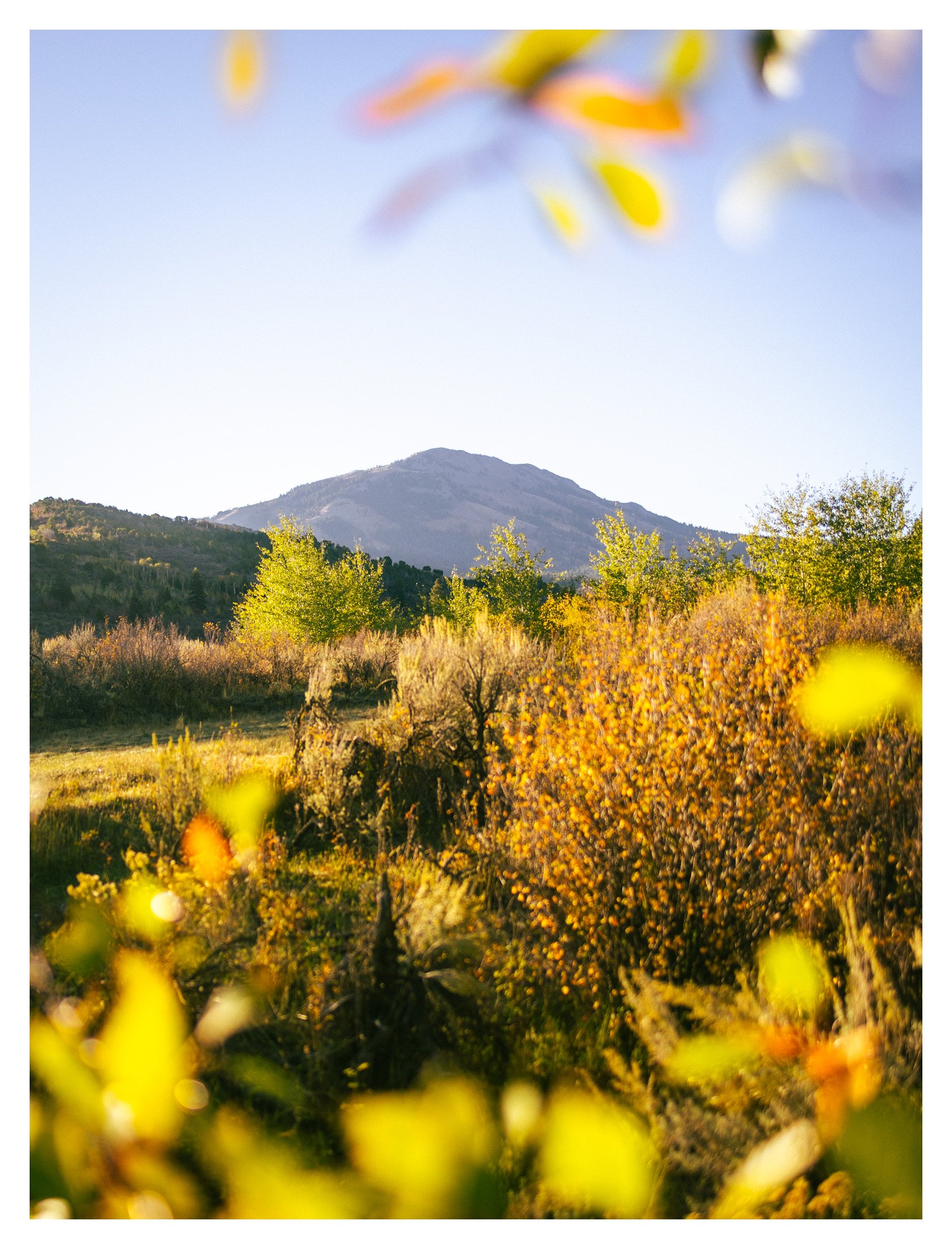

Fall Colors Near Pocatello: Where and how to photograph them
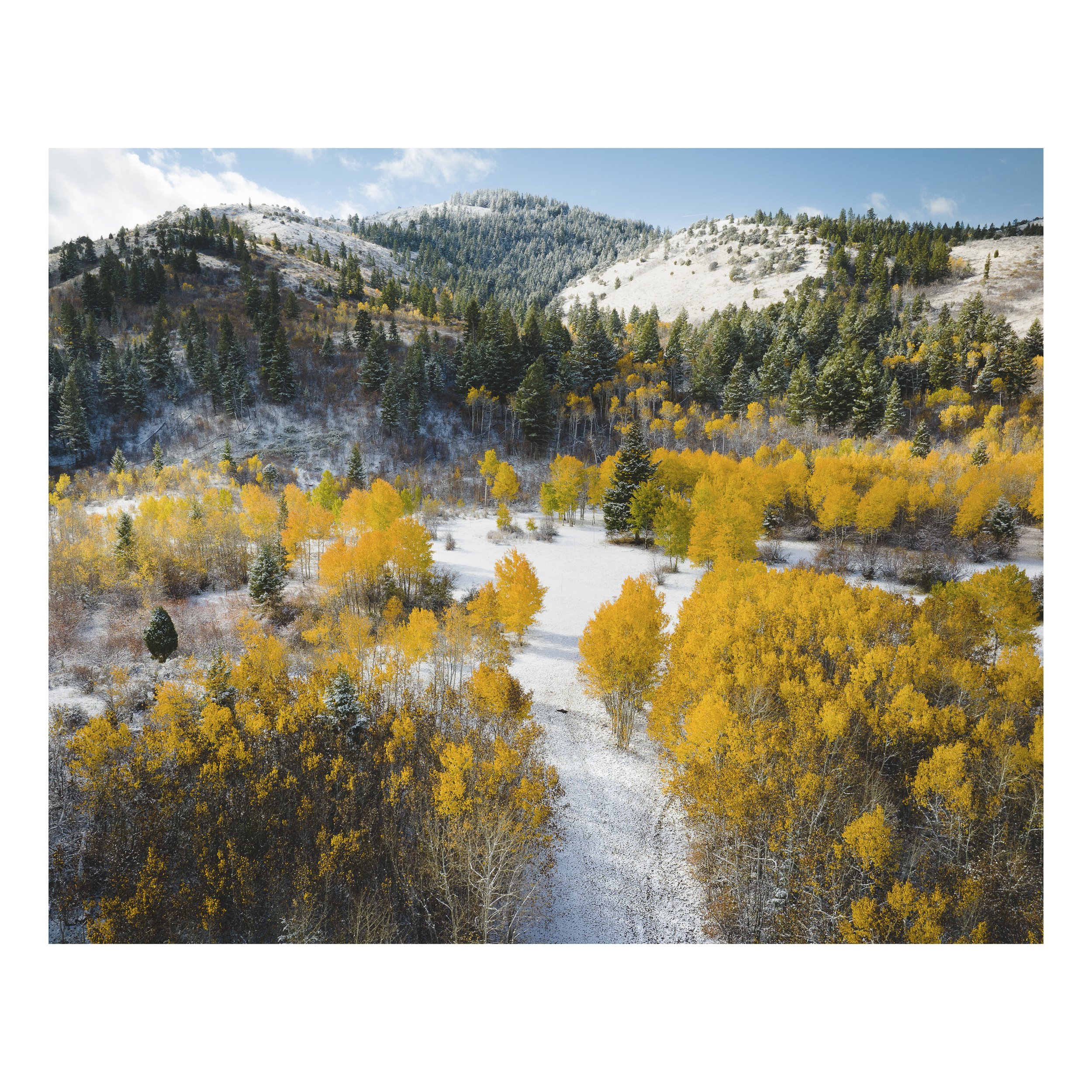
A light snow blankets the Mink Creek Nordic Center during a beautiful fall morning
One of my favorite things about living in Pocatello is that fall doesn’t arrive all at once.
It starts creeping into the mountains in September. Maples begin turning red and orange across the foothills. Aspens higher in the Bannock Range flash bright yellow. Then, as September turns into October, the color works its way down the drainages until the cottonwoods and mature trees around town finally join in.
That means we usually get several weeks when there is somewhere around Pocatello worth taking a camera.
And while the Tetons get most of the attention when people think about fall photography in eastern Idaho, Pocatello has a different look. Our mountains can turn genuinely red. Rocky Mountain maples spread across portions of the foothills in crimson, orange and burgundy, mixed with yellow aspens, dark evergreens and the tan grasses of the high desert.
So, when should you go, and where should you look?
When Do Fall Colors Peak Around Pocatello?
There isn’t a single peak-color weekend.
Weather, elevation, moisture and the first hard freezes can move things around considerably from year to year. A warm September can delay things, while a cold snap followed by wind can take a great-looking hillside from peak color to bare branches surprisingly quickly.
As a general rule, though, I start paying serious attention around the third week of September.
The higher country and mountain maples are usually the first places I watch. Late September through the first week of October is often the sweet spot for the hills around City Creek, Mink Creek and Scout Mountain. Aspens usually become increasingly important as October approaches.
By early to mid-October, some of the best color may be farther down the drainages and around Pocatello itself. Cottonwoods along waterways can hold yellow later than some of the higher-elevation foliage.
A good working window for the greater Pocatello area is roughly September 20 through October 15, but don’t treat those dates as a reservation. Treat them as a reason to start looking.
Idaho foliage guides similarly put Pocatello’s City Creek and Mink Creek season roughly from mid-September into early October, with red maples appearing before many of the aspens and cottonwoods reach their best color.
City Creek
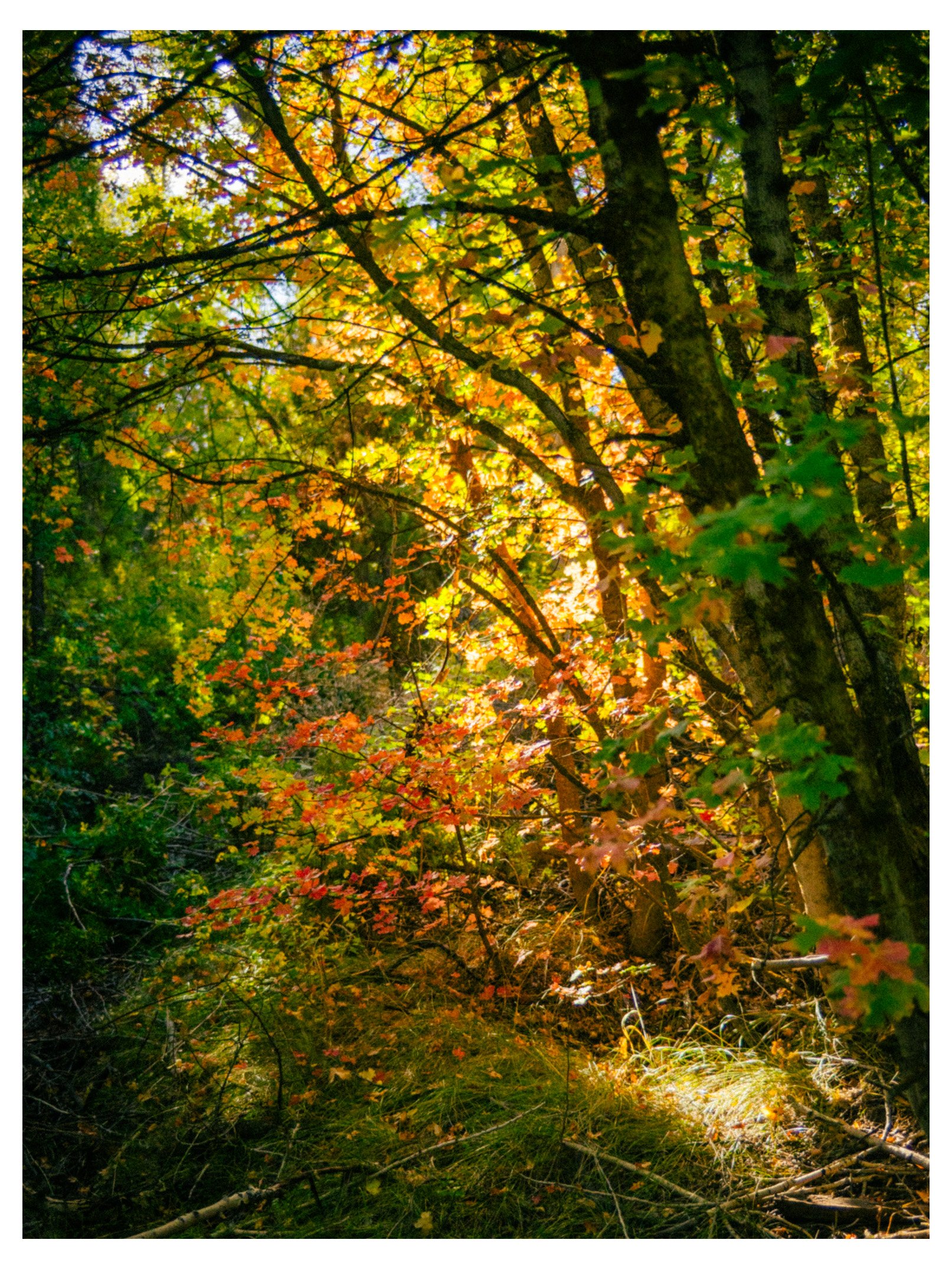
City Creek has a variety of foliage- reds, oranges, yellows, and greens
If someone asked me for one place to start, City Creek would probably be it.
It is incredibly close to town, easy to explore and has an unusually good variety of fall color. The maples can produce some tremendous reds and oranges, particularly across the hillsides, while the creek bottom gives you more intimate scenes beneath the trees.
The City Creek trail system also gives photographers options. Stay down near the creek and photograph leaves, water, bridges and enclosed woodland scenes, or gain some elevation and use the colorful vegetation as part of a larger view across the foothills.
Visit Idaho specifically recommends the City Creek and West Bench area for fall foliage, and the trail system is also noted for its mixture of colorful maples and aspens.
Best bet: Late September into early October.
Mink Creek and the Nordic Center
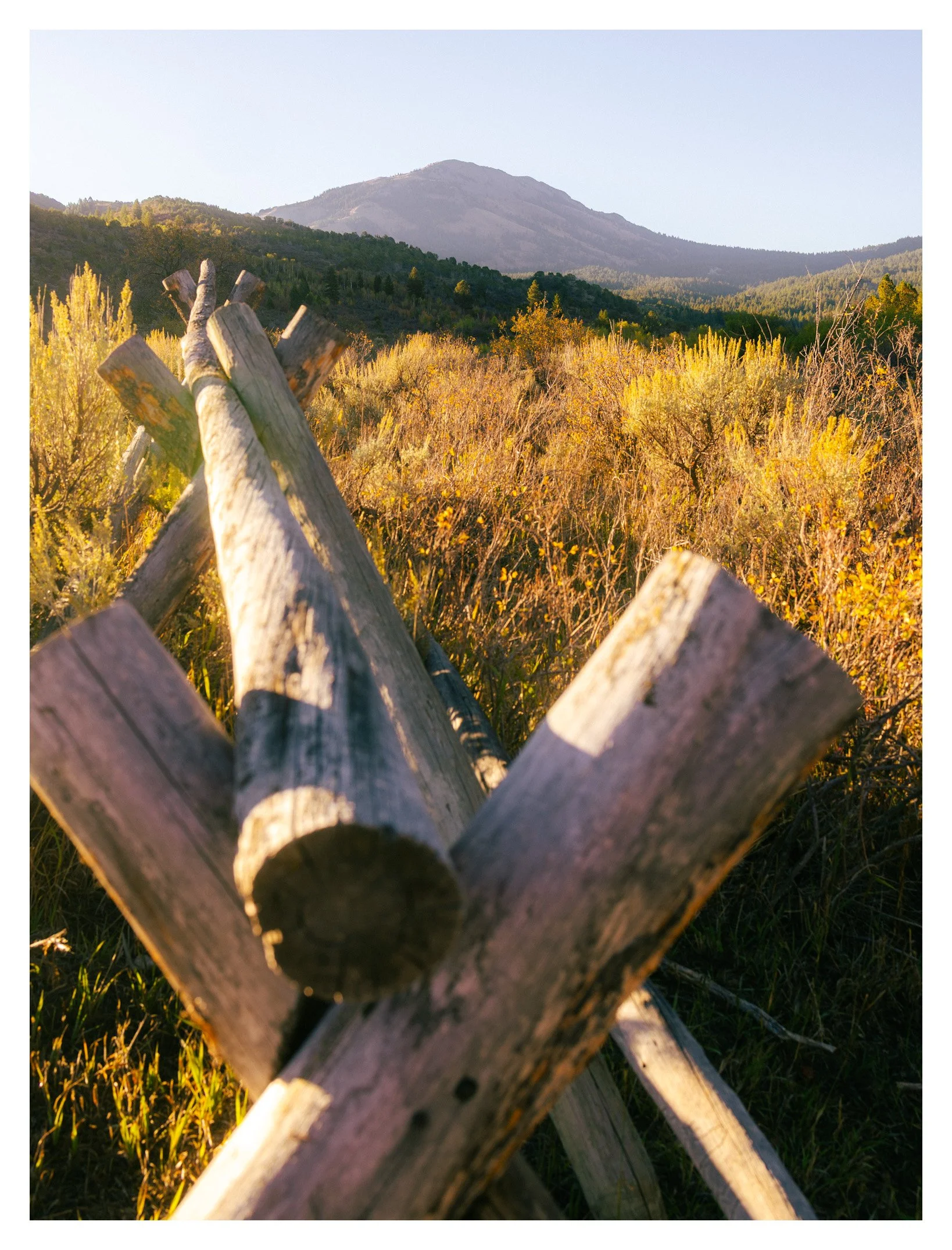
Early Autumn looking towards Scout Mountain
Mink Creek is probably my favorite area when I want to spend several hours wandering rather than photographing one specific location.
Drive south out of Pocatello and the landscape quickly changes. Trees become thicker, the drainages become wetter and you start getting some really nice mixtures of yellow, red, green and the muted grasses of fall.
One of my favorite stops is the Mink Creek Nordic Center. From there, you can explore the surrounding National Forest trails or continue farther into the mountains.
The nice thing photographically is that Mink Creek gives you both big landscapes and small scenes. A grove of yellow aspens can be beautiful from across a valley, but five minutes later you might find yourself photographing individual leaves, white aspen trunks or light filtering through the forest.
Mink Creek Road is also specifically highlighted by Visit Idaho for its fall foliage, including the yellow cottonwoods through the valley.
Best bet: Late September through roughly the first week or two of October.
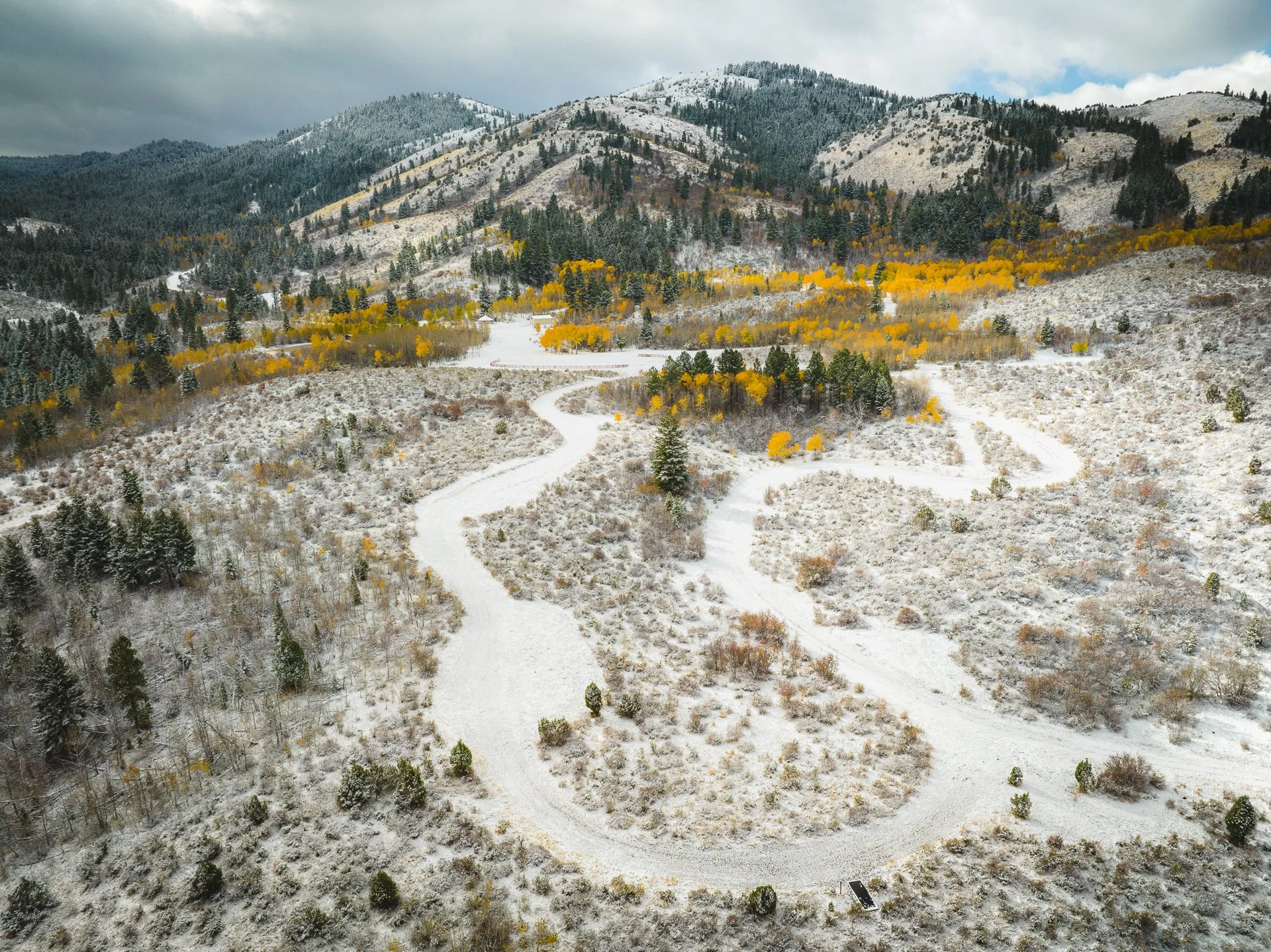
East Fork of Mink Creek and Scout Mountain
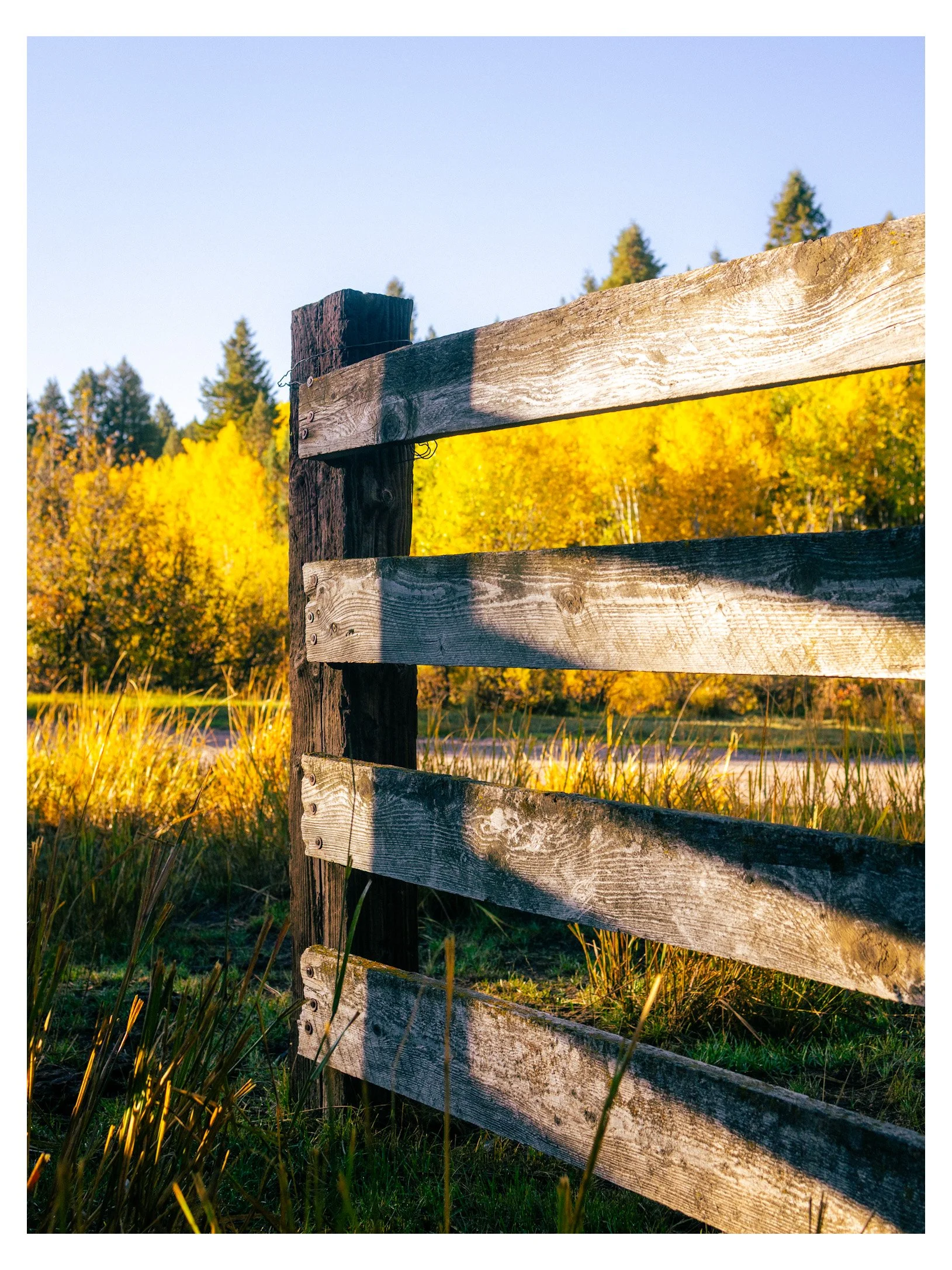
Don’t just focus on the trees. Up in the mountains, there are a variety of features that you can use to show the fall colors without being obvious about it.
Keep climbing and you reach some of my favorite country around Pocatello.
The road toward Scout Mountain takes you through substantially higher terrain, which means this is one of the first areas I watch each year. Aspen groves scattered through the mountains can turn brilliant yellow while surrounding conifers stay dark green.
There are also several places where the road opens up enough to photograph entire drainages rather than individual trees.
This is where a longer lens becomes especially useful. Instead of automatically reaching for an ultra-wide lens, try isolating a patch of aspens against a darker mountainside. Compression can make scattered areas of color look much denser and more dramatic.
Scout Mountain also occasionally gives you one of my favorite fall combinations: autumn color with fresh snow above it. Pocatello weather being Pocatello weather, that can happen surprisingly early.
Best bet: Mid-September through early October, with higher elevations generally changing first.
Gibson Jack
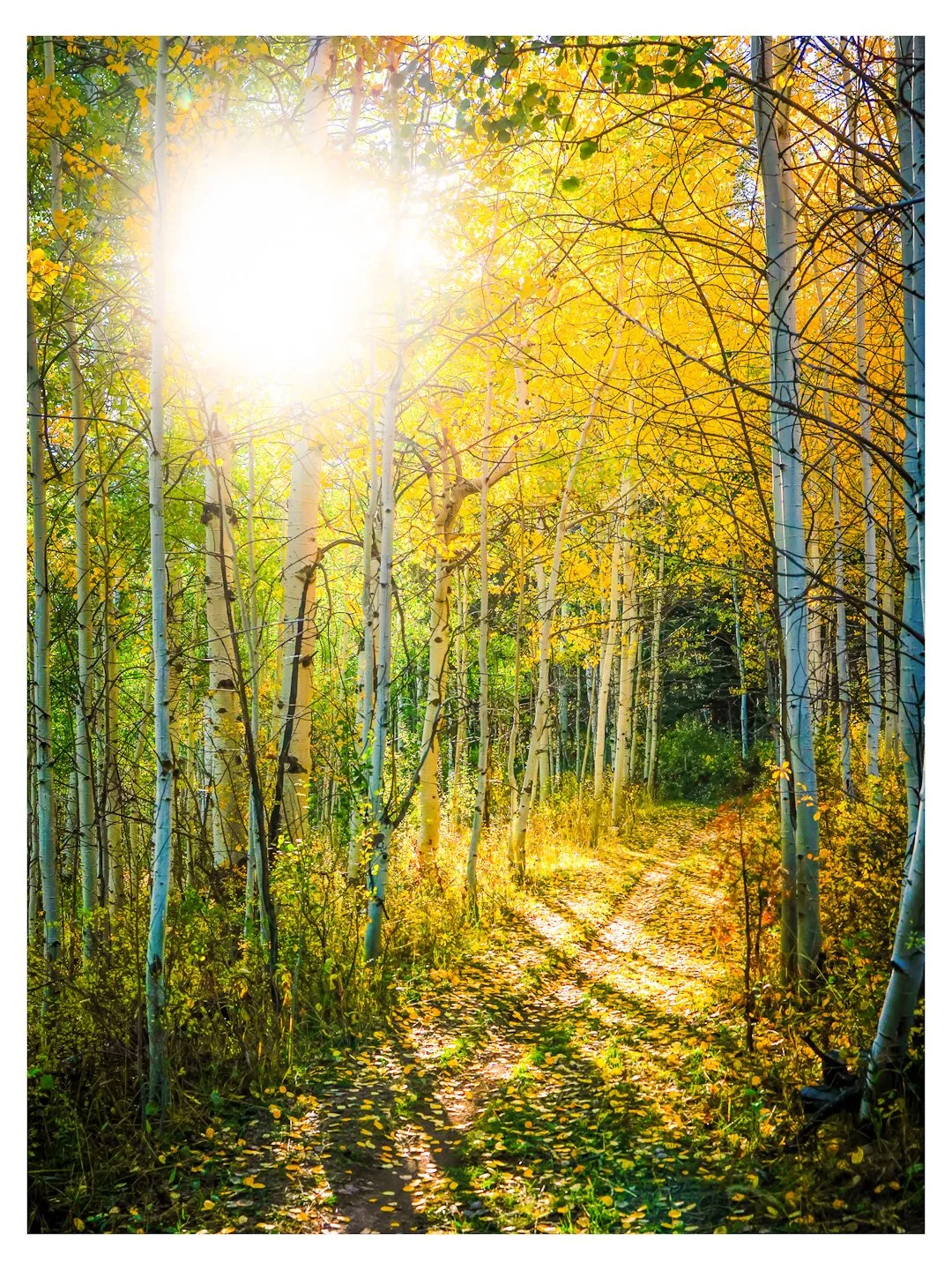
Gibson Jack is another great option when you want to combine a hike or mountain-bike ride with photography.
The drainage contains a mix of vegetation and elevation that can produce different stages of fall almost simultaneously. It also tends to feel a little more tucked away than some of the easiest City Creek locations.
Local Forest Service recommendations have long included Gibson Jack, along with West Fork of Mink Creek, as a good Pocatello-area fall-color destination.
I particularly like locations like this on partly cloudy days. Wait for sunlight to break through and illuminate one stand of yellow or red trees while the surrounding mountain remains in shadow. Suddenly you’ve got depth and a natural subject instead of simply photographing a mountainside covered in leaves.
Best bet: Late September into early October.
Buckskin Road
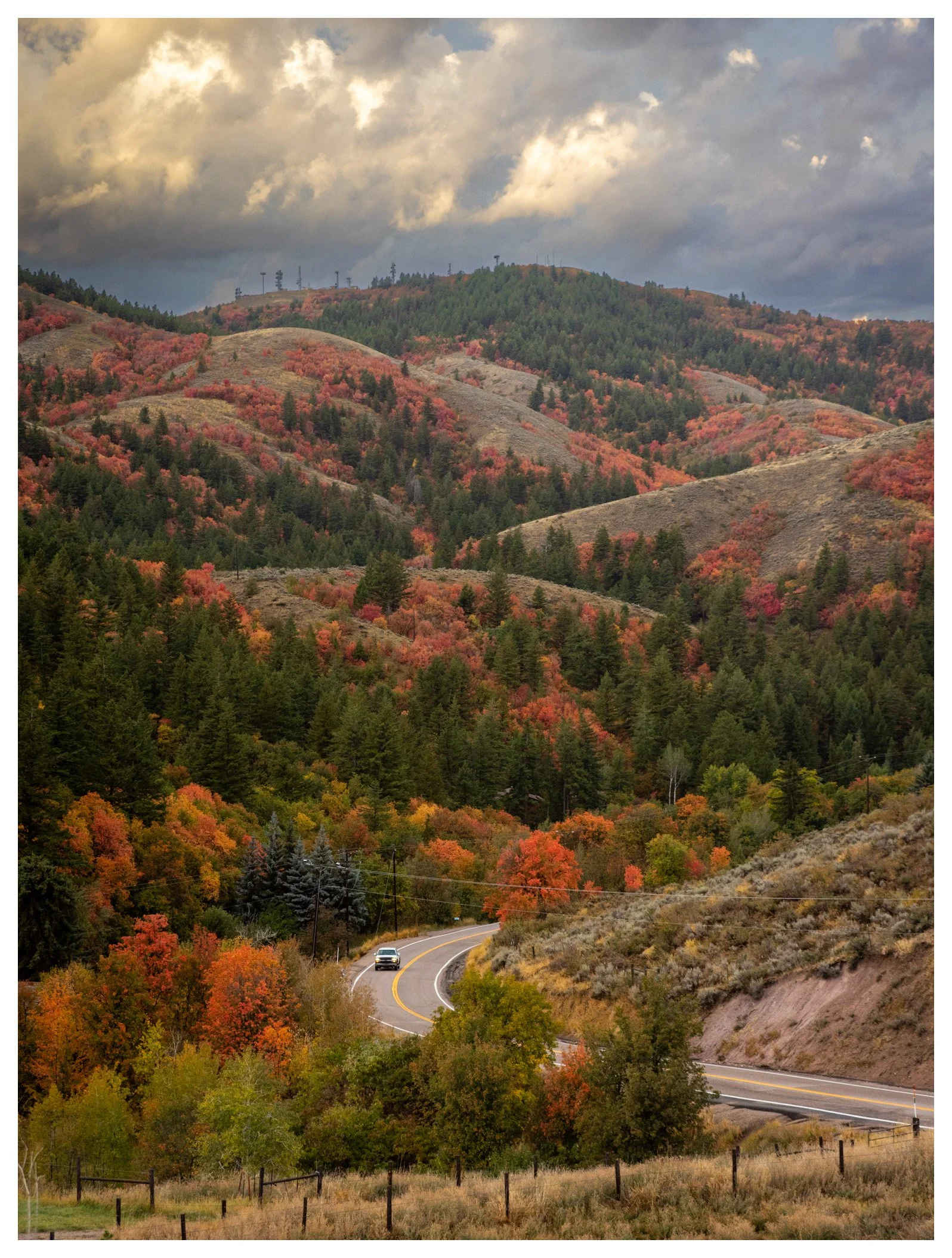
Buckskin Road is easy to overlook because most of the year it is simply a pretty drive into the mountains east of town.
Then September arrives.
The vegetation along the road can get spectacular, and because you’re following a mountain drainage, you can cover quite a bit of elevation simply by driving and stopping when something catches your eye.
In my experience, Buckskin begins getting interesting around the middle of September and can really turn on around the third or fourth week of the month, sometimes going into October. I’ve included it in my other recommendations for photography around Pocatello for exactly that reason.
It is also a good option if hiking isn’t part of the plan. Some of the best fall photography isn’t necessarily at the end of a five-mile trail.
Best bet: Early to mid-October.
Don’t Ignore Pocatello Itself
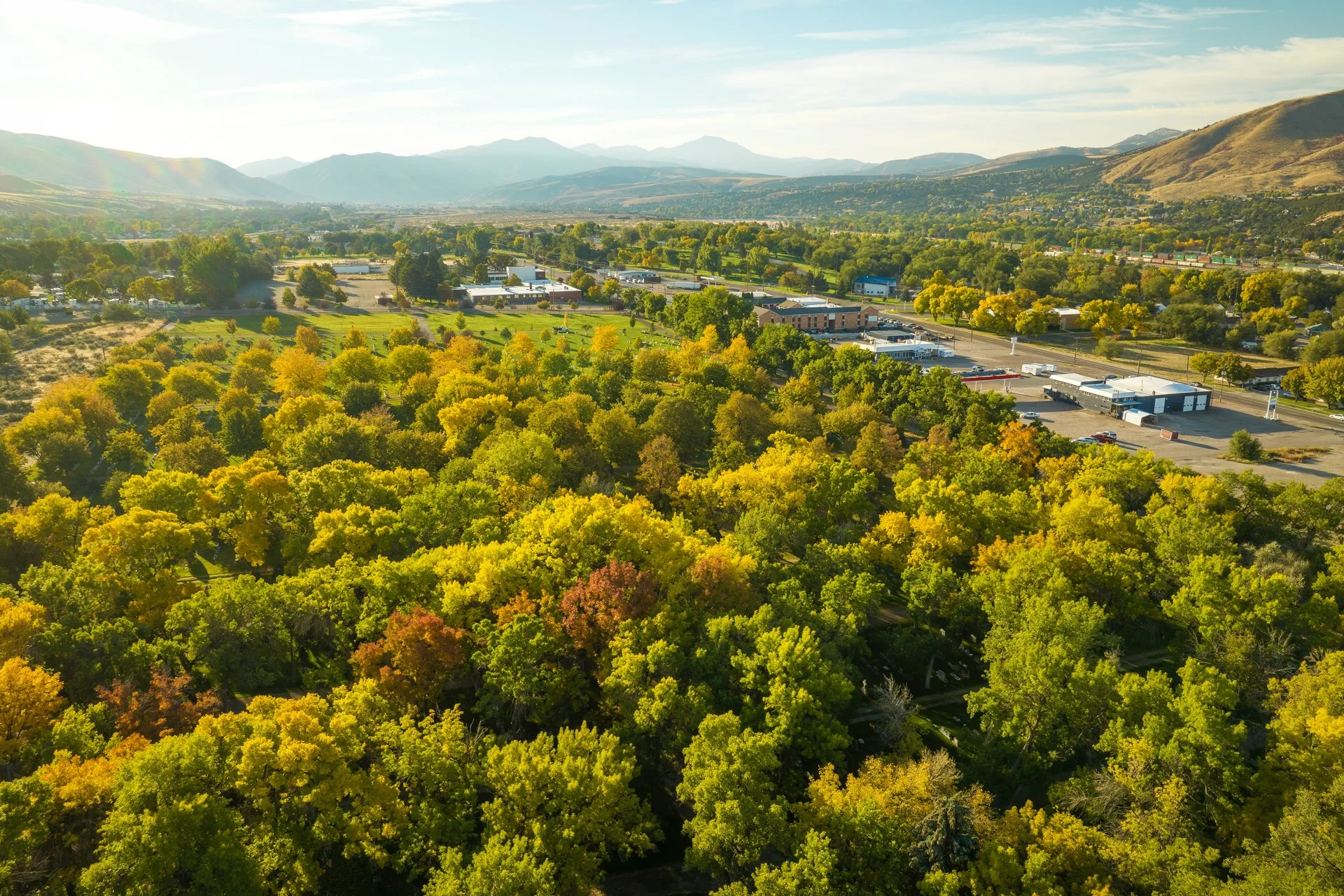
By the time the high-elevation aspens are beginning to lose their leaves, fall is often just getting good in town.
The Portneuf River corridor, Sacajawea Park, Mountain View Cemetery, Ross Park and older neighborhoods around Pocatello all have mature deciduous trees that can extend the photography season.
This is also when I start looking for compositions that aren’t simply photographs of trees.
Use the foliage as part of Pocatello.
Photograph a familiar building framed by yellow leaves. Shoot through a red tree toward a downtown storefront. Find a tree catching the last evening sunlight with the mountains behind it. Include people walking beneath the trees.
Some of my favorite fall photographs work because they’re photographs of Pocatello in autumn, rather than photographs that could have been taken anywhere trees change color.
How I Photograph Fall Color
Great color doesn’t automatically make a great photograph.
The biggest mistake is seeing an incredible red or yellow hillside, pointing the camera at the entire thing and assuming the photograph will somehow communicate what it felt like to stand there.
Instead, look for structure.
Find one yellow aspen surrounded by evergreens. Use a road disappearing through the trees. Find repeating white aspen trunks. Put a dark ridge behind a brightly illuminated grove. Use a creek or trail to lead the eye through the frame.
And don’t be afraid of a longer lens.
A wide-angle lens is great when you’re standing beneath a canopy or have a strong foreground, but lenses in the normal and telephoto ranges are fantastic for fall. They let you isolate patches of color and visually stack ridgelines, aspens and maples together.
Photograph the light, not just the leaves
My favorite conditions are often early or late in the day when the sun is low enough to pass through the leaves.
Backlighting can make yellow aspens practically glow.
Side lighting shows texture and gives a mountainside dimension.
Cloudy weather is also underrated. Soft light reduces harsh shadows and glare, making it much easier to photograph saturated reds and oranges in intimate woodland scenes.
A circular polarizer can be extremely useful after rain or around a creek because it cuts reflections from wet leaves and can reveal dramatically stronger color. Just be careful with very wide lenses where polarization across a blue sky can become uneven.
Protect your highlights
Digital cameras make it tempting to brighten everything until the image looks impressive on the back screen.
I’d rather protect the bright leaves and highlights.
Deep shadows are usually recoverable. Completely clipped yellow leaves aren’t.
Watch the histogram, particularly when sunlight is directly illuminating foliage surrounded by shade. If necessary, underexpose slightly and bring the darker portions of the scene back later.
Don’t oversaturate it
This one is particularly important with fall photography.
The colors around Pocatello can already be ridiculous sometimes even looking like you boosted the saturation too much with your naked eye. You don’t need to drag the saturation slider until every maple is radioactive red.
Good editing should make the photograph feel like the place did when you were standing there. Contrast, white balance and selective adjustments usually matter more than simply adding saturation.
My Favorite Fall Photography Trick: Follow Elevation
If you’re a week too early, go higher.
If you’re a week too late, go lower.
That simple rule will save more fall photography trips than almost anything else.
Pocatello is particularly good for this because you can go from town into the Bannock Range remarkably quickly. You might find nearly bare trees near Scout Mountain while the cottonwoods farther down Mink Creek are approaching their best color.
Fall moves.
That’s part of what makes photographing it fun.
Go Before You Think You Need To
Don’t wait for someone on social media to announce that fall colors have peaked.
By the time everybody is posting photographs from the same hillside, wind or a cold front may already be stripping leaves from the trees.
Starting around the second half of September, I keep a camera nearby and pay attention whenever I’m driving around Pocatello. Look at the foothills. Watch the maples along the drainages. Notice when isolated aspens begin changing.
Then go.
Our fall-color season isn’t particularly long, but when the maples turn red, the aspens turn gold and the first hint of snow appears on the Bannock Range, there aren’t many places I’d rather photograph.